

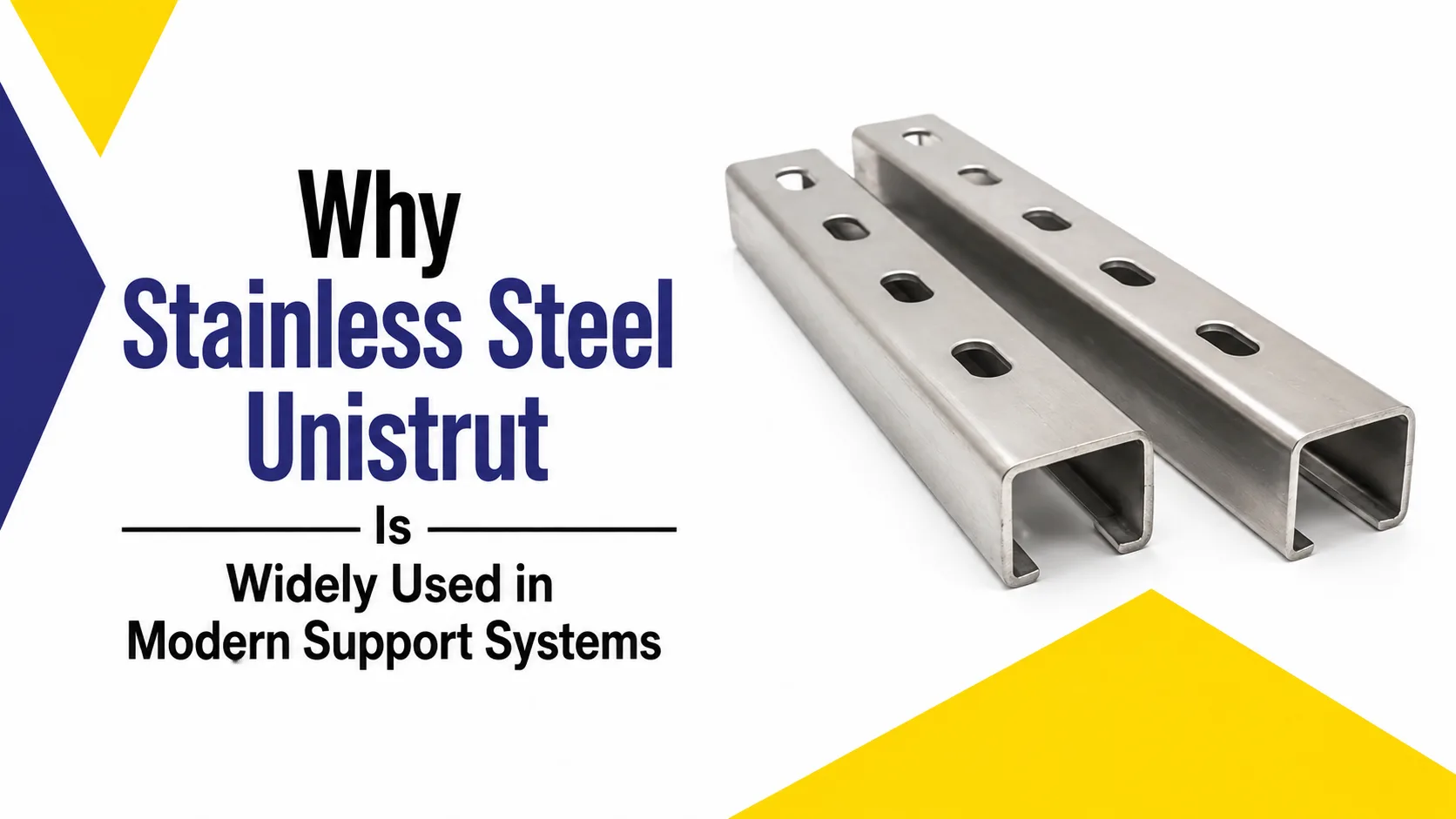
Stainless Steel Unistrut has become the go-to channel support system across industries that can’t afford corrosion, structural failure, or high maintenance costs. Secure and flexible, this material provides superior corrosion resistance and mechanical strength for tough environments. In food and coastal sectors, stainless unistrut often outperforms the traditional supports by offering much better long-term durability and essential hygiene.
A wide range of configurations is available to suit different structural requirements. Our types of stainless steel Unistrut channel systems include standard channel, slotted variants, back-to-back profiles, and solid strut options, each suited to specific load and installation conditions.
What Is Stainless Steel Unistrut?
Unistrut is basically the ultimate industrial building kit for professionals. These C-shaped or U-shaped channels provide a rock-solid base for pipes and cabling. The secret is the continuous slot, letting you bolt things in exactly where you need them. You won’t need a welding torch or a heavy drill to get the job done. This flexible approach means you can build, tweak, or totally swap your layout whenever the project requirements shift or grow over time or as per the client’s requirements.
Stainless Steel Unistrut takes that modular concept and produces it in SS 304 or SS 316. SS 304 handles most atmospheric and general industrial environments reliably. SS 316 adds molybdenum to the alloy, giving it superior resistance to chlorides and marine environments where SS 304 would eventually corrode. The result is a support system that handles the environmental demands of real industrial sites, not just controlled conditions. Many buyers also search for Unistrut Stainless Steel Channel systems for corrosion-resistant support frameworks in industrial settings.
Key Features of Stainless Steel Unistrut
High Corrosion Resistance
For support channels, stainless steel is preferred over mild steel due to corrosion resistance. Chrome in SS 304 and 316 provides a passive oxide layer that protects the surface from moisture, chemicals, and air. Without coating or treatment, such protection preserves the channel physically sound in chemical factories, coastal sites, and food-processing facilities.
Exceptional Strength and Durability
Our SS unistrut provides superior load-bearing capacity for your most demanding industrial projects. It resists deformation under long-term stress by effectively spreading weight over its profile. This ensures that your support structures retain their structural integrity and clamping strength over time. It is particularly effective in high-vibration settings like factories or plant rooms. Invest in a framing solution that stays secure and reliable year after year.
Easy Installation and Flexibility
This continuous slot design lets you insert supports, brackets, and fittings anywhere along the channel without any pre-drilling or messy onsite cutting. Layouts can be changed and extended without having to replace any channels. This flexibility is useful in projects where the installation needs to adapt during construction or will change in the future as per the requirements or situations.
Low Maintenance Requirements
Stainless steel doesn’t require painting, galvanising, or periodic surface treatment to maintain its corrosion resistance. Once installed, an SS unistrut framework needs only routine inspection. That low maintenance demand reduces the ongoing operational cost of the support system over its full service life, particularly relevant in hard-to-access installations.
Temperature and Chemical Resistance
SS unistrut maintains its mechanical properties across a wide temperature range. It also resists attack from cleaning agents, acids, and alkalis that would damage coated or mild steel alternatives. This makes it suitable for environments that require regular washdowns or exposure to process chemicals.
Advantages Over Other Materials
Mild steel unistrut has a lower initial cost but is susceptible to corrosion without surface protection, necessitating painting or galvanising, which incurs additional expenses and requires care. In humid or chemical environments, mild steel channels degrade and compromise structural integrity within years.
Aluminium offers light weight and reasonable corrosion resistance, but lacks the mechanical strength of stainless steel under heavy loads. The initial price for SS unistrut is higher, but it pays for itself through durability and very low maintenance. Over a decade or two, its reliable performance in harsh conditions makes it the cheapest total option for any serious installation.
Common Applications of SS Unistrut
Electrical and Cable Management Systems
SS Unistrut arranges and modifies cable routing frameworks within industrial and commercial cable trays, conduit supports, and cable ladder systems. Humidity and chemical exposure affect corrosion resistance.
HVAC Support Structures
Duct and pipe supports in HVAC systems rely on unistrut channels to carry the weight of ventilation and refrigerant pipework across ceiling voids and plant rooms. The modular system allows supports to be repositioned as system layouts change.
Industrial and Manufacturing Units
SS unistrut is used in manufacturing equipment framing, machine guarding, and panel mounting due to its load capacity and corrosion resistance in wash-down and chemical conditions.
Construction and Infrastructure Projects
Builders use stainless steel unistrut channels for outdoor framing and infrastructure. The reason is that mild steel corrodes and needs constant maintenance, but stainless steel performs better.
Food Processing and Pharmaceutical Industries
Materials in sanitary spaces must resist chemicals, inhibit germs, and meet food or medical safety standards. SS 316 unistrut exceeds statutory standards for these high-stakes, ultra-clean sectors.
Why Modern Industries Prefer Stainless Steel Unistrut
Infrastructure built today is expected to last longer, require less maintenance, and meet tighter compliance standards than it did a decade ago. Stainless steel Unistrut fits that direction. Its durability reduces lifecycle cost, its compliance with hygiene and safety standards removes approval barriers, and its modular design adapts to complex multi-level installations that rigid welded frameworks can’t efficiently accommodate.
Factors to Consider When Choosing Stainless Steel Unistrut
Grade selection is the first decision: SS 304 for general and atmospheric service, SS 316 for marine, coastal, or chemical environments. Load requirements determine the channel size, and an undersized channel deflects and loses clamping force over time. Environmental exposure narrows the grade and surface finish options. Size compatibility with fittings, bolts, and brackets must be confirmed before ordering. For proper setup and safety, refer to our detailed Unistrut Channel Installation Guidance before specifying or installing any new system.
Future Trends in Stainless Steel Support Systems
Smart construction systems integrate sensor-ready channel frameworks that allow monitoring equipment to be mounted without modification. Sustainability requirements are driving increased specification of fully recyclable stainless steel over coated mild steel alternatives. Industrial automation is expanding the range of equipment that needs modular, adjustable support structures and SS unistrut is well placed to meet that demand as installation complexity increases across sectors.
Conclusion
Unistrut fasteners are the core components required for effective modular support systems. They convert standard channel adaptability into structurally sound connections for industrial-grade loads. The superior corrosion resistance and reliability of stainless fasteners provide the ideal solution for infrastructure requiring long-term performance. Please contact us to discuss bolt specs, material grades, and compatibility with your existing channel system. Alternatively, you can browse our whole product line for comprehensive modular support options. Our catalogue helps you find the perfect project fit.

Vikram Rao is an experienced Unistrut Product Specialist, who has worked in this field for more than 20+ years. His metal frame system and support structure knowledge has been quite helpful in creating creative ideas for building projects all around.
See Full Bio ›