

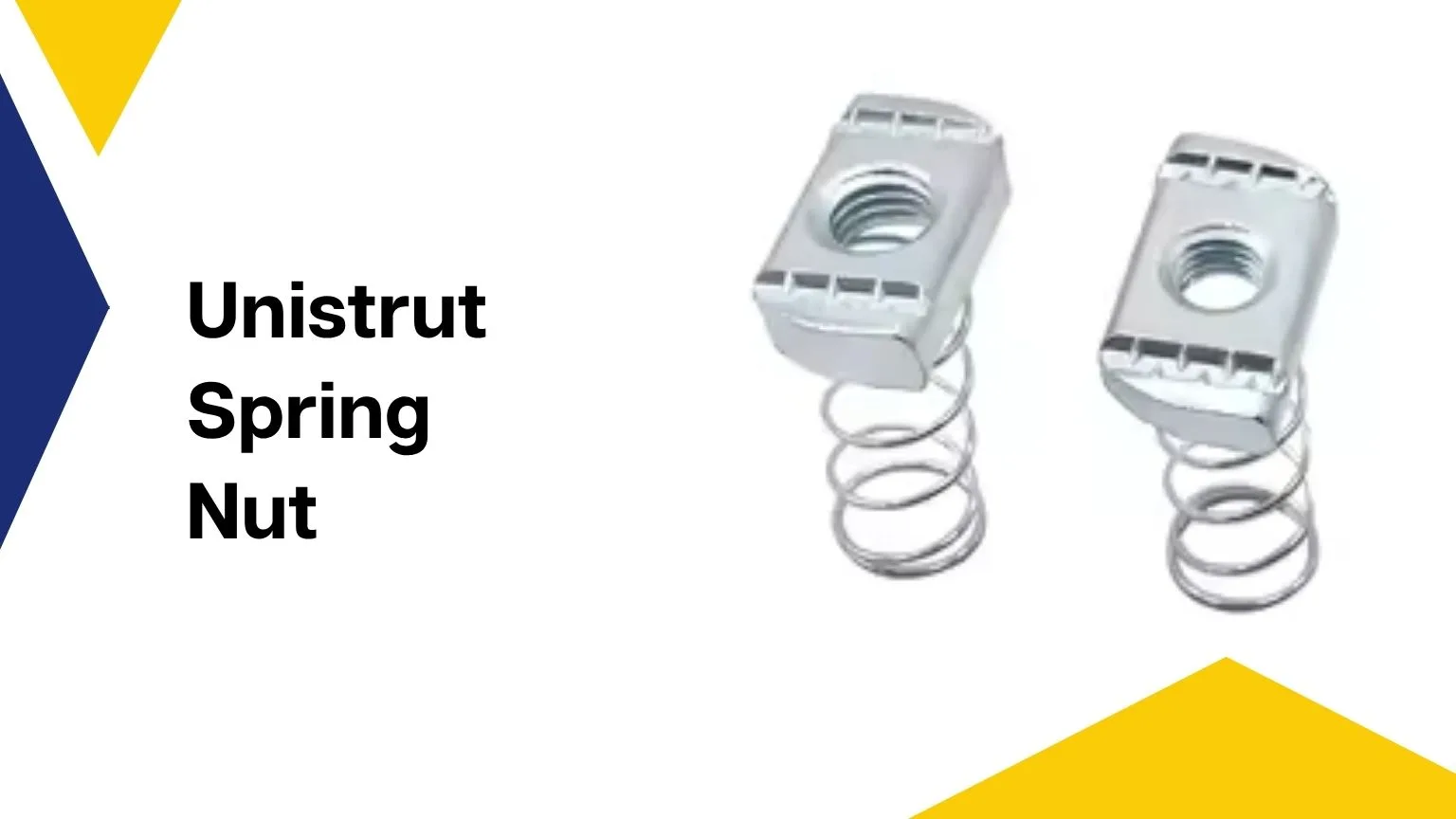
Fastening components carry more weight in strut channel systems than their size suggests, holding together electrical, mechanical, plumbing, HVAC, and industrial installations that need to stay adjustable long after the initial build. A Unistrut spring nut is one of the most practical solutions here: it drops inside a strut channel and creates a secure threaded connection point anywhere along the channel’s length, without drilling or welding. Heavy duty Unistrut spring nuts extend that convenience into higher-load applications where a standard spring nut wouldn’t hold up. Picking the right one comes down to channel profile, thread size, load requirements, material, and the conditions it’ll operate in.
What Is a Unistrut Spring Nut?
A spring nut is a threaded fastener paired with a spring clip that holds it in position inside a strut channel before a bolt is even installed. The spring pushes the nut against the channel’s lip, keeping it from sliding out of place during positioning. Once a bolt is threaded in and tightened, the nut locks firmly against the channel, and the spring’s job is done. That mechanism is exactly why unistrut spring nuts suit adjustable and flexible installations so well: the connection point can go anywhere along the channel without pre-drilled holes fixing its location in advance.
Types of Spring Nuts
Spring nuts lock into lips on the inside of metal framing channels to provide secure, adjustable bolting points without the need for welding.
- Standard Spring Nuts: General framing, standard serrated grooves for everyday use with cable trays, ducting and light pipe runs.
- Channel spring nuts: Constructed with side serrations that dig into the inward lips of the channel, preventing the nut from sliding out under shear weight.
- Strut Channel Nuts: A flat-bodied, springless kind that allows for easy insertion into tight channel gaps or packed existing runs when a spring is in the way.
- Spring Nuts with Springs: The original self-aligning design with an attached coil or zinc-platedleaf spring that holds the nut in place hands-free before you tighten the bolt.
- Long Spring Nuts: Available with long coil for deep strut channels (4141 mm). The nut is held against the lips and does not fall inside.
- Short Spring Nuts: Use a compact, low-profile spring designed for shallow half-height channels (41×21 mm) so the spring doesn’t bottom out and bind.
- Heavy-Duty Spring Nuts: Constructed of a thicker steel plate and deeper thread engagement, providing the increased pull-out strength required for heavy pipework, seismic bracing and high-vibration equipment.
How Do Unistrut Spring Nuts Work?
- Insert the nut into the channel at an angle that fits the channel opening.
- Position it at the required location along the channel’s length.
- Rotate or slide it into the locking position against the channel lip.
- Insert the compatible bolt through the mounted component.
- Tighten the connection to the recommended torque.
- Check the final assembly for secure engagement before loading it.
Key Factors When Choosing a Unistrut Spring Nut
1. Thread Size
Matching the nut’s thread to the bolt is non-negotiable; a mismatch either won’t tighten properly or will strip under load. Both metric and imperial thread options show up commonly, so confirm which standard your project specifies before ordering.
2. Strut Channel Compatibility
Check channel width, profile, and slot dimensions against the spring nut’s specification. A spring nut built for one channel system won’t necessarily seat correctly in another, even if the dimensions look close on paper.
3. Load Capacity
Weigh both static and dynamic loads the connection will carry, and step up to heavy-duty variants where higher loads are involved. Staying within manufacturer-rated load limits isn’t optional; exceeding them risks the connection failing under stress.
4. Materials
Spring nut applications are generally made from carbon steel, stainless steel and zinc plated steel. Corrosion resistant materials are worth the added expense in humid, corrosive or coastal regions where conventional carbon steel would corrode faster.
5. Surface Finish
Zinc plating is suitable for general corrosion protection for ordinary indoor and mild outdoor use. In more demanding settings, stainless steel is the obvious solution, and for exposures that are not quite ideal for either of these options, various protective coatings are used.
6. Application Environment
Indoor installations, outdoor installations, humid environments, industrial facilities, chemical exposure, and coastal or marine environments all place different demands on a spring nut’s material and finish, so the environment should drive the spec rather than the other way around.
7. Installation Requirements
Consider how accessible the mounting point will be and whether future adjustability matters for the project. Choose a spring configuration that allows easy positioning, and confirm it supports proper tightening and full engagement once installed.
Applications of Unistrut Spring Nuts
Unistrut spring nuts turn up across electrical cable tray support, conduit installation, HVAC systems, plumbing support, and pipe racks. They’re just as common in solar panel mounting, industrial equipment, mechanical support structures, warehouse infrastructure, and general construction, anywhere a strut channel needs a fast, adjustable connection point without permanent modification.
Conclusion
Selecting the right Unistrut spring nut comes down to thread size, channel compatibility, load capacity, material, finish, and the environment it’ll operate in. Getting that match right improves installation efficiency, connection reliability, and long-term performance across the life of the system. Before finalizing a choice, verify the load ratings and compatibility specifications against your project’s actual requirements rather than assuming one spring nut fits every strut channel setup.

Vikram Rao is an experienced Unistrut Product Specialist, who has worked in this field for more than 20+ years. His metal frame system and support structure knowledge has been quite helpful in creating creative ideas for building projects all around.
See Full Bio ›