

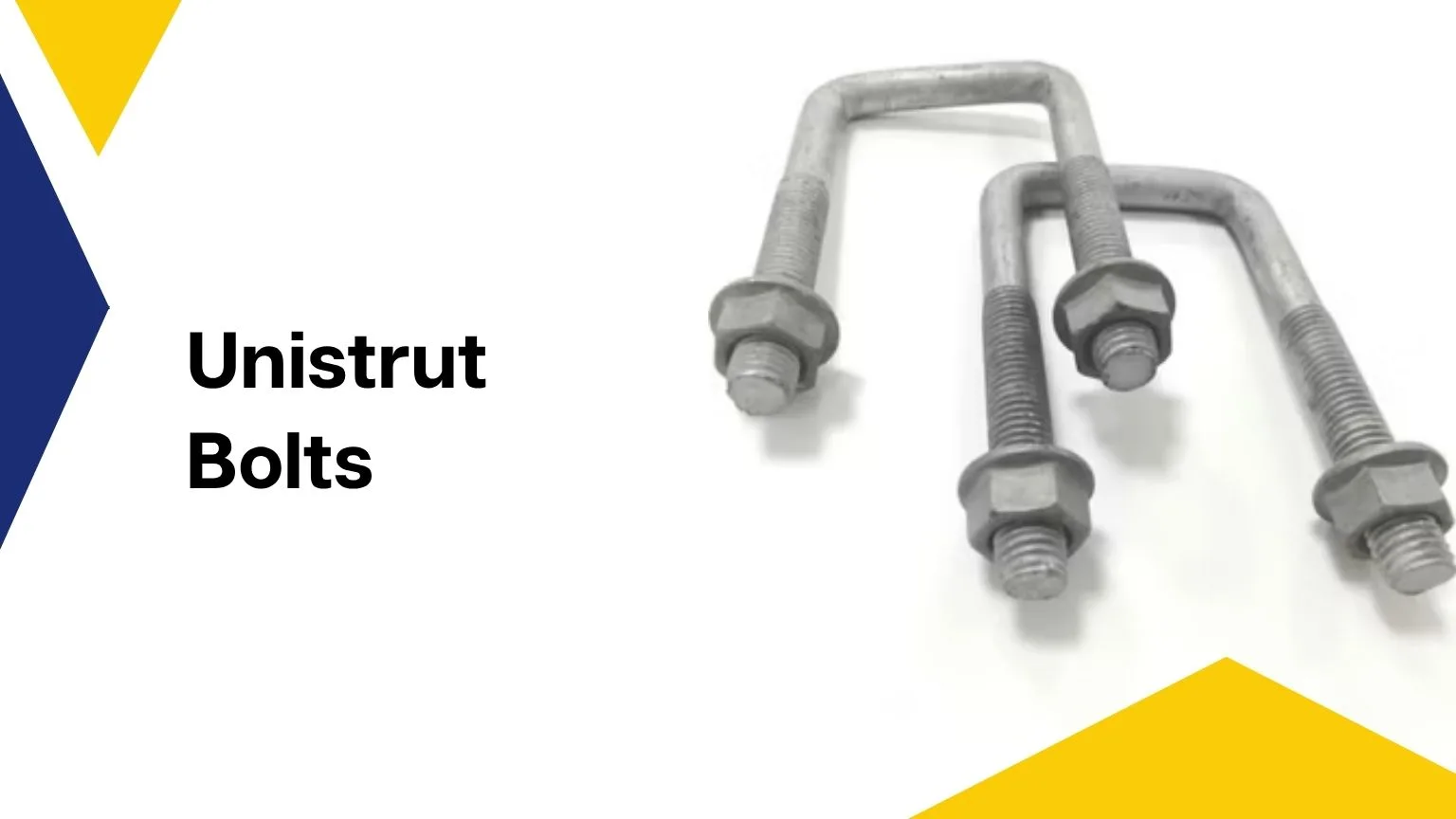
Unistrut bolts provide the essential structural fastening required to secure modular channel supports across various industrial engineering applications. Unistrut Bolts are the fastening components designed specifically to connect and secure strut channel systems and whatever equipment they’re supporting. Durable Unistrut fasteners keep these assemblies stable through vibration, load changes, and repeated adjustment over the life of an installation. This article covers the different types of Unistrut bolts, their features, common applications, material options, and the factors worth checking before you specify one for a project.
What Are Unistrut Bolts?
Unistrut bolts are fasteners built to work inside strut channel assemblies, pairing with channel nuts, spring nuts, and other strut accessories to create a secure connection point anywhere along the channel’s length. That pairing is what gives strut systems their defining advantage: adjustable, modular support that doesn’t require drilling or welding at a fixed point. Getting bolt and channel compatibility right matters more than it might seem, since a mismatched thread or head profile can leave a connection that looks tight but isn’t actually load-rated for the assembly it’s holding.
Types of Unistrut Bolts
1. Hex Head Strut Bolts
Hex head strut bolts install with a standard wrench or socket, which makes them straightforward to tighten to spec even in tight working spaces. They are more suitable for the general-purpose strut assembly work across electrical and mechanical installations, and their familiar head shape means most crews already have the tools on hand.
2. Channel Bolts
Channel bolts are purpose-built for compatibility with strut channel slots, sliding into position before rotating to lock against the channel’s lip. As Strut Channel Bolts, they show up constantly in industrial support work, from cable tray runs to equipment mounting frames.
3. Square Head Bolts
Square head bolts resist rotation once seated in a channel slot, since the flat sides key against the slot geometry. That anti-rotation behavior makes positioning and tightening more predictable, particularly on assemblies where a bolt turning loose mid-installation would be a real problem.
4. Carriage-Style Strut Bolts
Carriage-style strut bolts carry a rounded head that sits flush and smooth against the surface. They’re the right call wherever a low-profile finish matters, such as installations where a protruding hex head could snag cabling, clothing, or passing equipment.
5. Serrated Flange Bolts
Serrated flange bolts add small ridges under the head that bite into the mounting surface, resisting loosening from vibration far better than a plain flat-seated bolt. That anti-rotation characteristic makes them a solid pick for Unistrut Channel Bolts in equipment exposed to constant mechanical vibration.
Across all five types, Strut Bolts share the same underlying job: holding a strut channel assembly together reliably, with the head style and locking behavior chosen to fit the specific installation.
Key Features of Unistrut Bolts
- High mechanical strength for load-bearing connections
- Secure fastening that resists loosening under vibration
- Thread compatibility with standard channel nuts and spring nuts
- Corrosion resistance suited to the installation environment
- Dimensional accuracy for consistent, repeatable assembly
- Easy installation without specialized tools in most cases
- Compatibility across different strut channel profiles
- Long service life under normal operating conditions
Applications of Unistrut Bolts
Unistrut bolts are widely used in industrial and commercial support systems where secure, adjustable fastening is required. Their compatibility with strut channels makes them suitable for a range of installations, including:
- Electrical Installations: Used to secure cable trays, conduits, junction boxes, and electrical equipment to strut channel systems.
- HVAC Systems: Help mount air ducts, pipes, ventilation equipment, and other HVAC components securely.
- Plumbing and Piping: Used for supporting water lines, process piping, and other pipework in commercial and industrial facilities.
- Industrial Equipment: Provide reliable connections for machinery frames, equipment supports, and modular structures.
- Solar Panel Mounting: Used in certain strut-based solar mounting systems to secure frames and support components.
- Construction Projects: Suitable for suspended ceilings, partition supports, signage, and other structural assemblies.
- Data Centers: Help organize and support cable management systems, electrical conduits, and equipment infrastructure.
- Manufacturing Facilities: Used for modular support structures, utility lines, machinery components, and maintenance installations.
How to Choose the Right Unistrut Bolts
Bolt Size: Match diameter and length precisely with the assembly being fastened.
Thread Type: Confirm compatibility with the corresponding channel nut before ordering.
Channel Profile: Verify the bolt suits the specific strut channel it’s going into.
Load Requirements: Select bolts rated for the strength and load capacity the assembly demands.
Material: Weigh carbon steel against stainless steel depending on the operating environment.
Surface Finish: Choose a finish that provides appropriate corrosion protection for the setting.
Operating Environment: Account for indoor, outdoor, humid, chemical, or coastal conditions.
Installation Method: Confirm the bolt can actually be positioned and tightened correctly in the assembly.
Common Installation Mistakes to Avoid
- Using the wrong thread types with the channel nut
- Beyond recommended load limits
- Channel bolt in improper location
- Not tight enough, under-torqued or over-torqued
- Substandard materials in corrosive conditions
- Failure to ensure the completed assembly is ready for use before placing it into service
Conclusion
The correct Unistrut bolts are chosen by matching the bolt’s type, size, threads, material, finish, channel shape and load requirements to the actual installation. When correctly applied these fasteners provide reliable, flexible, and long-lasting connections to electrical, mechanical and industrial support systems. Getting that fit right the first time is easier when working with established unistrut bolt suppliers who provide the full spectrum of kinds and materials, boosting both installation efficiency and long-term durability.

Vikram Rao is an experienced Unistrut Product Specialist, who has worked in this field for more than 20+ years. His metal frame system and support structure knowledge has been quite helpful in creating creative ideas for building projects all around.
See Full Bio ›